
Best for managed website lead capture: Sitesmartly. Best for local service inquiries: Google Local Services Ads. Best for targeted search campaigns: Google Ads. This 2026 HVAC lead generation guide compares five approaches by the job you need done: attracting inquiries, capturing them, or turning customer relationships into referrals.
- Sitesmartly is best for HVAC lead generation when you need managed website lead capture and call answering.
- Google Local Services Ads suits contractors seeking inquiries through local service searches.
- Google Ads suits HVAC companies that need control over search terms, landing pages, and campaign targeting.
- Local SEO services support organic discovery; customer referral programs turn existing relationships into introductions.
- Choose the service that fixes your current bottleneck, not the one promising the most leads.
Why this matters
An HVAC lead generation service can solve the wrong problem. Buying more traffic does not fix unanswered calls, and a better website does not automatically put your company in front of more homeowners.
Separate demand generation from lead capture before you sign anything. Demand generation brings people to your business. Lead capture records their request and gets it to someone who can respond.
Sitesmartly is best for HVAC contractors who need managed website lead capture and call answering. That is a different job from running an advertising campaign or supplying purchased leads.
For a website-focused comparison, use the guide to website builders for HVAC companies. Here, the decision is broader: which service addresses the point where your next job gets lost?
What makes the best HVAC lead generation service?
Judge a provider against these criteria before reading a proposal:
- Source fit: Does the service attract new prospects, capture existing visitors, or generate introductions from customers?
- Service-area fit: Can the approach focus on the towns and HVAC work you actually handle?
- Lead definition: Does a lead mean a call, a completed form, a qualified request, or an appointment?
- Response process: Who receives the inquiry, and who takes responsibility for following up?
- Account access: Which website, advertising accounts, customer records, and reporting can you access directly?
- Outcome tracking: Can you connect an inquiry to its source, appointment, and completed job?
A useful proposal explains all six. A report full of clicks does not answer whether those clicks became work you wanted.
Do not treat every homeowner inquiry as equivalent. A request for a repair outside your territory and an installation request inside your territory need different handling. Your provider should understand that distinction before building campaigns or forms.
HVAC lead generation services at a glance
These are five service approaches, not five interchangeable lead sellers. The order starts with capturing demand, then covers paid search, organic discovery, and referrals. No ranking here implies measured performance superiority.
| Rank | Service or approach | Best for | Standout function | Key limitation |
|---|---|---|---|---|
| 1 | Sitesmartly | Managed website lead capture | Contractor websites with lead-capture, quoting, and call-answering tools | Website management is not the same as an advertising campaign |
| 2 | Google Local Services Ads | Local service inquiries | Connects eligible service businesses with people searching locally | Eligibility and category coverage must be checked |
| 3 | Google Ads | Targeted search campaigns | Control over keywords, targeting, and landing-page destinations | Requires ongoing campaign and conversion management |
| 4 | Local SEO service | Organic local discovery | Work on business profiles, service pages, and local search visibility | Organic placement is not guaranteed |
| 5 | Customer referral program | Introductions from existing customers | Gives satisfied customers a clear way to refer someone | Depends on an existing customer base |
1. Sitesmartly: best HVAC lead generation service for managed capture
Sitesmartly builds and manages websites for home-service contractors, including HVAC companies. Its offering includes industry-specific lead-capture, quoting, and call-answering tools.
This approach fits the contractor who needs the website and inquiry-handling setup managed rather than another dashboard to maintain. It addresses what happens when someone reaches your business; it does not establish that advertising, search optimization, or purchased leads are included.
Before choosing managed capture, trace a real inquiry through your current setup. Does the homeowner find the right service information? Can the homeowner submit a useful request? Does that request reach the person responsible for booking work?
Sitesmartly pros:
- Managed websites reduce the website work you need to handle yourself.
- The stated offering serves home-service contractors, including HVAC businesses.
- Lead-capture and quoting tools support the inquiry stage.
- Call-answering tools address a separate contact channel from website forms.
Sitesmartly cons:
- Lead capture alone does not create a new traffic source.
- You still need a process for qualifying requests and booking jobs.
- Advertising scope, reporting access, and handoff details need confirmation before purchase.
Best for: HVAC contractors with a website-management or inquiry-capture problem.
Verdict: Buy managed capture when inquiries reach your business but the website and handoff need attention. Hold if your main problem is getting discovered.
2. Google Local Services Ads: best for local service inquiries
Google Local Services Ads connects eligible service businesses with people searching for services in their area. HVAC contractors should check the current requirements for their location and service category before treating it as a usable acquisition channel.
The appeal is the context: the person is looking for a local service, not reading a general article about heating or cooling. That context still does not establish whether the inquiry fits your schedule, service territory, or type of work.
In 2026, evaluate the actual account setup rather than assuming every local advertising product works the same way. If an agency manages the account, ask who controls access, handles inquiries, and explains lead quality.
Google Local Services Ads pros:
- Appears in a local-service search context.
- Offers a distinct channel from ordinary website search traffic.
- Gives eligible contractors a way to receive service inquiries through Google.
Google Local Services Ads cons:
- Business eligibility and service-category coverage are constraints.
- An inquiry is not a confirmed appointment or completed job.
- Account management does not replace your response process.
Best for: Eligible HVAC businesses seeking local service inquiries through Google.
Verdict: Buy management only after confirming eligibility, account access, and who handles incoming requests. Skip any proposal that leaves those responsibilities unclear.
3. Google Ads: best for targeted HVAC search campaigns
Google Ads lets businesses run search advertising using keywords, geographic targeting, and selected landing-page destinations. An HVAC advertising service manages those campaign choices and the associated measurement.
This approach fits a company that needs to separate different kinds of demand. Repair inquiries, replacement inquiries, and maintenance inquiries do not need identical messages or landing pages.
The practical advantage is control. You can specify the work you want to promote and send the visitor to a page built around that request. The practical drawback is management: someone must review search terms, exclusions, landing pages, and conversion tracking.
Google Ads pros:
- Supports campaigns built around specific HVAC searches.
- Provides geographic targeting controls.
- Lets campaigns use different landing pages for different services.
- Supports conversion measurement when tracking is configured correctly.
Google Ads cons:
- Poor targeting can attract inquiries you cannot serve.
- Click totals do not establish lead quality.
- Campaigns require management beyond initial setup.
Best for: HVAC contractors who want controlled search campaigns for defined services and territories.
Verdict: Buy search campaign management when you have a clear service target and a working booking process. Hold if nobody can connect campaign inquiries to appointments.
4. Local SEO service: best for organic local discovery
A local SEO service works on how your HVAC business appears in unpaid local search. The scope can include Google Business Profile management, website service pages, business-information consistency, and other local search work.
Choose a provider by the tasks and reporting it agrees to deliver. “Get you ranking” is not a scope. Profile corrections, service-page improvements, and reports tied to relevant searches are concrete deliverables.
For your 2026 plan, keep service-area accuracy ahead of page volume. A page should help a homeowner understand the work you perform and whether you serve that location. Publishing more pages is not a substitute for useful information.
Local SEO service pros:
- Addresses unpaid discovery rather than paid campaign delivery.
- Can improve the clarity of service and location information.
- Connects website content with local business-profile work.
- Supports a search presence beyond an individual advertising campaign.
Local SEO service cons:
- A provider cannot guarantee organic placement.
- Progress requires evaluation over time, not a launch-day judgment.
- Rankings alone do not prove that inquiries became jobs.
Best for: HVAC companies whose local search presence and service information need sustained attention.
Verdict: Buy local SEO when the provider names the work, gives you account access, and measures relevant inquiries. Skip guaranteed-ranking promises.
5. Customer referral program: best for existing customer relationships
A customer referral program gives satisfied customers a clear way to introduce another homeowner to your HVAC business. A service provider can help organize the request, contact route, and tracking process.
The program does not need an elaborate promotion to be understandable. It needs a clear request and a simple way for the referred person to contact you. Any incentive, terms, or customer communication should be defined by your business rather than assumed by the provider.
This is a separate acquisition approach from search. It starts with people who already know your work, so it belongs in a plan for an established customer base rather than a plan that depends entirely on new discovery.
Customer referral program pros:
- Uses relationships with existing customers.
- Creates a defined route for word-of-mouth introductions.
- Allows referral sources to be recorded alongside other inquiry sources.
Customer referral program cons:
- Requires an existing customer base.
- Does not give you control over when introductions happen.
- Customer messages and any program terms still need oversight.
Best for: Established HVAC businesses that want a repeatable referral process.
Verdict: Buy help organizing referrals when you have customer relationships to build on. Hold if you need a channel that does not depend on an existing customer base.
How these services were ranked
The ranking follows the buying criteria above: source fit, service-area fit, lead definition, response process, account access, and outcome tracking. Each approach has a different use-case slot because they solve different problems.
This is a scope-based buying guide, not a performance test. It does not claim that one provider delivers more leads, better appointment rates, or better job results than another.
For a 2026 shortlist, ask every provider to explain the same inquiry journey. Comparable answers are more useful than proposals that each define success differently.
Check the handoff before you buy
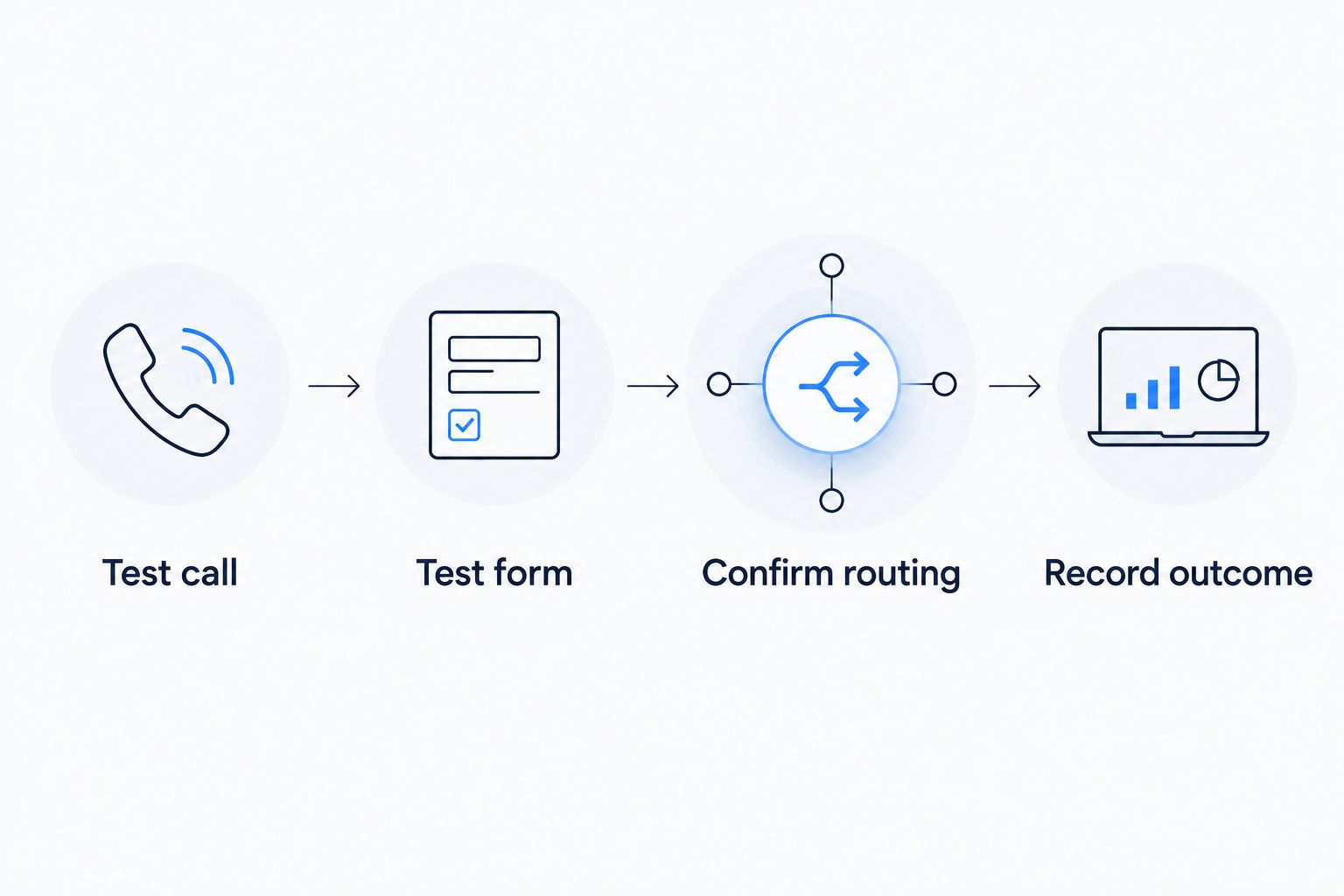
Before adding a lead generation service, check the contact route you already have. Use these steps as acceptance checks, not as performance benchmarks:
- Test call: Make 1 test call through the number a homeowner uses. Check who answers and where the request goes.
- Test form: Send 1 test form submission from a phone. Check that the right person receives the service details.
- Confirm routing: Identify the person responsible for the next action. A notification without an owner is an unfinished handoff.
- Record outcome: Follow the request through to 1 confirmed appointment, where applicable. Record its source and final disposition.
The point is not to create test leads. It is to verify that a real inquiry has a usable path from first contact to the calendar.
Repeat the check after changing a form, phone route, campaign destination, or staff responsibility. A correct setup at launch does not verify a later change.
Which HVAC lead generation service should you choose?
Start with the bottleneck you can identify. If homeowners already contact you and the inquiry route is weak, choose managed capture. If the contact route works but discovery is weak, evaluate an acquisition channel.
Use this decision order for 2026:
- Website and inquiry handling need work: Consider managed website lead capture.
- You want local service inquiries: Check Google Local Services Ads eligibility and management scope.
- You want specific search campaigns: Consider Google Ads with defined services, territory, and tracking.
- Your unpaid local presence needs work: Choose a local SEO service with named deliverables.
- You have satisfied customers to contact: Organize a customer referral program.
For the undecided contractor, the default next move is the handoff check—not another subscription. Once you know whether the problem is discovery, capture, or follow-up, the appropriate service becomes much easier to choose.
FAQ
What's the best HVAC lead generation service in 2026?
The best service depends on the problem: managed capture for inquiry handling, Google Local Services Ads for eligible local service advertising, Google Ads for targeted campaigns, and local SEO for unpaid discovery. Choose the approach that addresses your identified bottleneck.
Is a managed HVAC website the same as a lead generation agency?
No. A managed website handles the website and its stated contact tools; a lead generation agency can offer separate acquisition services. Check the agreement for advertising, SEO, lead delivery, and reporting scope.
Is Google Local Services Ads better than Google Ads for HVAC?
Neither is automatically better for every HVAC business. Google Local Services Ads has eligibility requirements and a local-service inquiry format, while Google Ads offers keyword, targeting, and landing-page controls.
Should I choose HVAC SEO or paid search first?
Choose according to the gap you need to address. Local SEO works on unpaid discovery, while paid search creates advertising campaigns; both still require a working contact and follow-up process.
How do I know whether an HVAC lead is useful?
A useful inquiry fits your service territory, the work you perform, and your qualification rules. Track whether it becomes an appointment and completed job rather than counting every call or form as equivalent.
What should I ask an HVAC lead generation provider before signing?
Ask what counts as a lead, where inquiries come from, who owns the accounts, and who follows up. Require a clear explanation of reporting, cancellation terms, and the work included in the agreement.
One last thing
A missed inquiry and an unqualified inquiry are different problems. The first needs a better contact or response process; the second needs better targeting or qualification.
Record the reason an inquiry did not become an appointment. “Outside service area,” “wrong service,” and “no follow-up” point to different fixes. That distinction gives you a better buying decision than a single total labeled leads.