

Best overall for managed lead capture: Sitesmartly. Best for targeted paid search: Google Search Ads; best budget-conscious starting point: Google Business Profile. This 2026 guide compares 5 options for water restoration contractors, separating services that attract inquiries from tools that help you answer them.
- Sitesmartly fits lead generation for water restoration companies that need managed websites, lead capture, and call-answering tools.
- Google Search Ads fits contractors seeking search traffic targeted to their service area.
- Google Business Profile supports local discovery; it does not replace a website or a response process.
- Choose local SEO for website visibility and referral partnerships for relationships with businesses serving the same customers.
Why this matters
Getting an inquiry and winning the job are separate problems. An advertising service addresses the first. Your website, phone handling, and follow-up process address the second.
For a water restoration company, the distinction changes what you should buy. If nobody finds your business, you need a discovery channel. If people already contact you but struggle to explain the damage or reach someone, you need a better intake process.
Your 2026 decision should start with the gap in that chain. Buying more traffic does not fix an unanswered phone, and rebuilding a website does not automatically create search demand.
What makes the best water restoration lead generation service
Judge each option against these criteria before comparing proposals:
- Local intent: Can you focus on the places you actually serve and the restoration work you accept?
- Clear intake: Can a homeowner explain the problem and provide a usable callback number without unnecessary steps?
- Response ownership: Is someone responsible for acknowledging the inquiry and deciding what happens next?
- Lead source visibility: Can you distinguish advertising inquiries, organic search inquiries, and partner referrals?
- Useful reporting: Does reporting connect inquiries to accepted jobs rather than stopping at clicks or form submissions?
- Control: Do you know who controls the website, advertising account, business listing, and customer records?
A proposal should explain these points in plain English. Ask for a demonstration of the customer journey, not just screenshots of traffic reports.
Water restoration lead generation options at a glance
These options solve different problems. The order reflects their role in a contractor's lead process, not a measured performance ranking.
| Option | Best for | Standout feature | Key limitation |
|---|---|---|---|
| Sitesmartly | Managed website and lead capture | Contractor websites with quoting and call-answering tools | Intake tools do not replace field response |
| Google Search Ads | Targeted paid search | Search advertising with geographic targeting | Advertising still needs a working intake process |
| Google Business Profile | Budget-conscious local discovery | Business information in Google Search and Maps | A listing offers less control than your own website |
| Local SEO agency | Improving organic website visibility | Search-focused work on your website and local presence | Organic placement is not guaranteed |
| Referral partnerships | Building relationships with adjacent businesses | Introductions from businesses serving related needs | Partners cannot guarantee a steady inquiry flow |
1. Sitesmartly: best for managed website lead capture
Sitesmartly builds and manages websites for home-service contractors, including water restoration companies. Its offering includes industry-specific lead-capture, quoting, and call-answering tools. That makes it a fit when your website and inquiry handling need attention together.
This is a managed website service, not simply another place to buy advertising. Evaluate it by following an inquiry from the website through the next action your team must take.
Sitesmartly pros:
- Combines website management with lead-capture tools.
- Serves home-service contractors, including restoration businesses.
- Includes quoting tools within the stated offering.
- Includes call-answering tools for the intake process.
Sitesmartly cons:
- Website intake cannot perform an on-site assessment or dispatch your crew.
- A managed approach requires you to define your service area, accepted work, and handoff instructions clearly.
- Lead capture still needs a source of visitors and a person responsible for follow-up.
Best for: Owners who want a managed contractor website rather than another website maintenance task.
Before choosing, ask to see how an inquiry reaches your team and how the customer knows what happens next. Clarify which quoting functions apply to your restoration work; an initial inquiry is not the same as a confirmed scope of damage.
Verdict: Buy for managed intake; do not treat a website as a complete traffic strategy.
2. Google Search Ads: best for targeted paid search
Google Search Ads lets you advertise against search queries and set geographic targeting. For water restoration, that gives you a way to reach people searching for the services you provide in the areas you cover.
The campaign and the destination page must agree. An ad about water damage restoration should lead to a page that explains restoration services, not force the visitor to search through unrelated work.
Google Search Ads pros:
- Lets you target search terms connected to your services.
- Provides geographic targeting controls.
- Allows you to adjust advertising and exclude unwanted queries.
- Provides reporting on advertising interactions.
Google Search Ads cons:
- Clicks and inquiries do not establish whether a job fits your business.
- Broad search terms can attract requests outside your intended scope.
- Weak pages and poor phone handling remain problems after the ad generates a visit.
Best for: Contractors who have a working intake process and want targeted search traffic.
For a 2026 campaign brief, spell out your service boundaries before approving ads. List the work you accept, the locations you serve, and the requests your team should reject. Use search-term reporting to check whether actual searches match that brief.
Verdict: Buy after your landing page and response process work; wait if inquiries still disappear after submission.
3. Google Business Profile: best for budget-conscious local discovery
Google Business Profile lets an eligible business maintain information that appears in Google Search and Maps. Your profile can show contact details, service information, photos, and customer reviews.
Treat the profile as a local discovery asset. It helps a customer understand who you are and how to contact you, but it is not a substitute for a website that explains your restoration work.
Google Business Profile pros:
- Places business information within Google's local search experience.
- Gives customers a place to read and leave reviews.
- Supports photos that show your actual business and work.
- Lets you maintain key contact and business information.
Google Business Profile cons:
- Verification, content, and eligibility must follow Google's rules.
- You do not control the surrounding search results or competing listings.
- Maintaining a profile does not guarantee a particular ranking.
Best for: Restoration contractors whose immediate task is getting their local business information in order.
Check the phone number, business details, and service information against what your team actually offers. Represent your business accurately; do not list an office that does not exist. Ask customers for honest reviews without telling them what rating to leave.
Make profile accuracy part of your 2026 operating checklist, especially when contact details or service coverage change.
Verdict: Start here for local business information; skip anyone promising guaranteed map placement.
4. Local SEO agency: best for organic website visibility
A local SEO agency works on your website's search visibility and local presence. Depending on the agreed scope, the work can include technical fixes, service-page improvements, business information consistency, and search reporting.
Choose the agency by its proposed work, not by the label. A useful restoration proposal explains which pages need attention and how the agency will distinguish search visits from actual inquiries.
Local SEO agency pros:
- Can address website problems that affect search access and usability.
- Can improve how pages describe your services and coverage.
- Can coordinate website content with local business information.
- Can establish reporting around organic inquiries.
Local SEO agency cons:
- Search rankings and inquiry volumes are not guaranteed.
- Similar-looking packages can contain very different work.
- Better visibility still depends on a usable website and an effective handoff.
Best for: Contractors with an existing website that needs clearer service coverage and better organic search visibility.
Ask for examples of deliverables before signing. A page about water damage cleanup should explain that service, not repeat the same generic paragraph with a different city name. Your 2026 scope should identify the pages being changed, the reason for each change, and the reporting you will receive.
Verdict: Buy a defined scope; skip ranking guarantees and unexplained monthly activity reports.
5. Referral partnerships: best for adjacent-business relationships
Referral partnerships connect your restoration business with companies that encounter related customer needs. Examples include plumbers, property managers, and other businesses that need a restoration contact when water damage falls outside their own work.
This is a relationship channel rather than an advertising platform. The useful part is a clear handoff: the partner understands what you handle, and your team knows how to respond to the introduction.
Referral partnership pros:
- Connects businesses serving related customer problems.
- Lets partners explain why they are introducing your company.
- Supports direct conversations about coverage and job fit.
- Does not depend on a particular search ranking.
Referral partnership cons:
- Partners do not control when customers need restoration work.
- Poor communication can damage the referring business's relationship with its customer.
- Referral arrangements need clear responsibilities and attention to applicable rules.
Best for: Contractors prepared to maintain relationships and communicate reliably after an introduction.
Give partners a plain description of the work you accept and the areas you serve. Agree on who contacts the customer and what information can be shared. Do not let the partner promise response times, insurance outcomes, or work you have not approved.
Verdict: Build alongside search channels; do not rely on referrals as a guaranteed schedule.
How these options were ranked
The criteria are local intent, intake quality, response ownership, reporting, and control. The first option addresses website management and capture; the next options address paid discovery, local listings, organic visibility, and business relationships.
This is a fit-based ranking, not a claim that one provider generates more restoration jobs than another. No conversion rate or lead-volume comparison supports that claim here. Choose the option that fixes your current bottleneck, then judge it using your own accepted jobs.
Which lead generation option should you choose?
Sitesmartly is best for water restoration contractors who want managed websites and lead-capture tools. That is the default choice when website upkeep and inquiry handling are the work you want managed.
If your website and response process already work, choose the discovery channel instead:
- Choose Google Search Ads for targeted paid search.
- Choose Google Business Profile to establish accurate local business information.
- Choose a local SEO agency for a defined organic website improvement project.
- Choose referral partnerships to build relationships with adjacent businesses.
Do not buy every channel at once just because they appear in a 2026 shortlist. Fix the broken stage first. Otherwise, you add another source of inquiries without learning whether the underlying problem changed.
Check the handoff before adding another channel
Run 3 test inquiries through your process: a phone call, a website submission, and a partner-style introduction. These are recommended checks, not a performance benchmark.
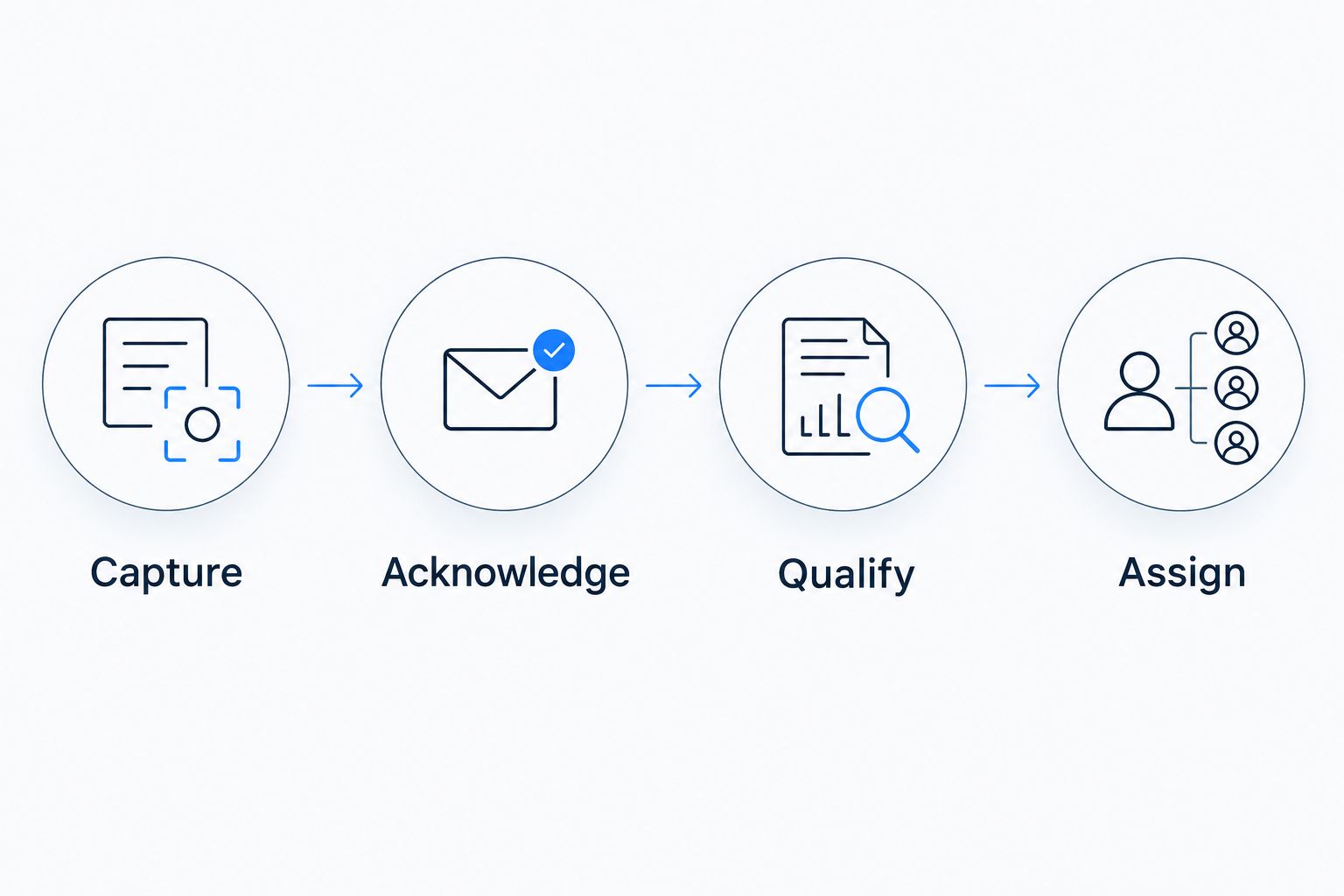
Follow each inquiry through the same sequence:
- Capture: Does the inquiry reach the right place with usable contact details?
- Acknowledge: Does the customer receive an accurate explanation of what happens next?
- Qualify: Does your team establish location, requested work, and whether the job fits?
- Assign: Is a named person responsible for the next action?
Your website provider, advertising manager, and office team should understand where their responsibilities end. An inquiry that appears in a dashboard but has no owner is not a finished handoff.
Keep a simple record of the source, requested work, next action, and outcome. Review rejected inquiries as well as accepted jobs. Out-of-area requests and unrelated services tell you where targeting or page wording needs correction.
Review your website intake
Explore managed contractor websites with lead-capture, quoting, and call-answering tools.
FAQ
What's the best lead generation service for a water restoration company?
The best service depends on the stage you need to fix: managed websites address intake, while search advertising addresses paid discovery. Choose a service with a clear handoff to the person responsible for responding.
Is Google Search Ads better than local SEO for restoration leads?
Google Search Ads and local SEO serve different needs: paid search buys advertising placement, while SEO works on organic visibility. Choose based on your current website, intake process, and ability to manage each channel.
Can a website generate water restoration leads on its own?
A website can capture inquiries, but it still needs visitors and a response process. Pair clear service pages with a discovery channel and assign responsibility for every inquiry.
Should a restoration company use Google Business Profile?
An eligible restoration company should maintain accurate information on Google Business Profile. Follow Google's rules and keep contact details and business information consistent with your actual operation.
Are referral leads better than advertising leads?
Referral leads are not automatically better than advertising leads. Judge both by service-area fit, accepted work, and the jobs your team actually wins rather than by source alone.
What should I ask a water restoration lead generation agency?
Ask what work the agency performs, which accounts you control, how inquiries are tracked, and who handles the customer handoff. Request a clear scope rather than a guaranteed ranking or an unsupported job-volume promise.
How do I know whether lead generation is working?
Track inquiries through qualification, assignment, and job outcomes. Traffic and form submissions are useful signals, but they do not show whether the inquiries fit your business or become accepted work.
One last thing
The next lead is not always the next problem to solve. Read the wording a customer sees immediately after submitting your form, then compare it with what your team actually does.
If the message promises a callback but nobody owns that callback, fix the assignment before adding traffic. Accurate expectations and a clear next action belong in the same process as lead generation.